Continue Your Pilgrimage
Next Shrines to Visit · 次に巡る一の宮
| Founded | 780 CE (11th yr of Hoki) |
|---|---|
| Main Deities | 顕国魂神 |
| Rank | Shin-Ichinomiya of Tsugaru Province |
| Annual Festival | Lunar Aug 1 (Oyama Sankei) |
| Goshuin Fee | ¥ 500 |
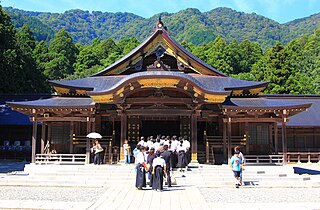
Iwakiyama Jinja.
In the far north of Honshu, in Aomori, where apple orchards now spread across the plain, a single mountain rises from the flatness. Mount Iwaki. Locals call it the Tsugaru Fuji.
The shrine sits at its foot, facing directly up the slope. Its main approach has been arranged so that, walking toward the inner hall, you are also walking toward the mountain.
Each summer, in the festival called Oyama Sankei, the people of this region — old, young, families, neighbors — climb the mountain wearing white. They start before sunrise. They reach the summit by mid-morning. They sing songs in the Tsugaru dialect, songs that no one else in Japan understands without translation.
The local language is its own thing here. Visitors from Tokyo often need an interpreter. The dialect carries words and rhythms that go back many centuries.
When the summer climbers reach the top, they look out across all of Tsugaru. Apple orchards. The Sea of Japan in the west. The dark forests of Shirakami in the south.
The mountain is one of the few in Japan that has been climbed in this way, by ordinary residents, every year for centuries. Not pilgrims from elsewhere. The neighbors.
The shrine grounds are unusually colorful for the north of Japan — bright vermillion, gold, and detailed Edo-period carving. People here sometimes call this place "the Nikko of the North."
But the truer thing is on the mountain.
Stand at the gate. Look up. The mountain is the shrine.
| Hatsuhoryo (fee) | ¥ 500 |
|---|---|
| Hours | 9:00 – 16:30 |
| Style | Hand-written (jikagaki) |
| Limited Editions | Oyama Sankei edition (Lunar Aug) |
| Notes | Mt. Iwaki summit Okumiya exists |
Plan the visit end-to-end — hotels, transport, tours, and a goshuin book.
Some links are affiliate (commission-based). Helps fund the site.