Continue Your Pilgrimage
Next Shrines to Visit · 次に巡る一の宮
| Founded | Ancient (Moto-Ise tradition) |
|---|---|
| Main Deities | 彦火明命 |
| Rank | Ichinomiya of Tango Province |
| Annual Festival | Apr 24 (Reisai · Aoi Festival) |
| Goshuin Fee | ¥ 500 |
Kono Jinja.
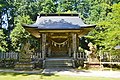
At the northern tip of one of Japan's most famous landscapes — the long sandbar called Amanohashidate, "the Bridge of Heaven" — sits a quiet shrine that has been there for two thousand years.
The sandbar itself stretches three and a half kilometers across the bay, covered in pine trees, narrow as a road. From a distance, looking at it from the surrounding hills, it appears to float on the water — a thin line connecting one shore of land to another.
There is an old way of viewing the bridge. You stand on the hill at the top of the sandbar, and you bend forward, reaching between your legs to look at the bridge upside down. Seen this way, the sandbar appears suspended in the sky rather than the sea. The name — Bridge of Heaven — suddenly makes sense.
This shrine, at the base of the sandbar, holds an extraordinary record. The family of priests who run it have been passing the role from father to son, in unbroken line, for over eighty generations. The family register is the oldest known in Japan, designated a National Treasure.
Eighty generations. Almost two thousand years.
What does it feel like to know that your great-great-great-great-great-great-great-grandfather did the same job, in the same place, looking at the same view?
Stand at the foot of Amanohashidate. Look back. The bridge of pines runs across the water, just as it did two thousand years ago.
Some places teach the meaning of long, long memory.
| Hatsuhoryo (fee) | ¥ 300 |
|---|---|
| Hours | 9:00 – 16:30 |
| Style | Hand-written (jikagaki) |
| Limited Editions | Moto-Ise + Aoi Festival editions |
| Notes | Often paired with Amanohashidate sightseeing |
Plan the visit end-to-end — hotels, transport, tours, and a goshuin book.
Some links are affiliate (commission-based). Helps fund the site.