Continue Your Pilgrimage
Next Shrines to Visit · 次に巡る一の宮
| Founded | Ancient (trad. Jimmu's eastern campaign) |
|---|---|
| Main Deities | 大麻比古大神 / 猿田彦大神 |
| Rank | Ichinomiya of Awa(-Tokushima) Province |
| Annual Festival | Nov 1 (Reitaisai) |
| Goshuin Fee | ¥ 500 |
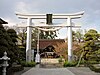
Oasahiko Jinja.
In the small town of Naruto in Tokushima Prefecture, sits a shrine that, in addition to its eleven hundred years of Japanese history, also carries an unexpected German one.
In 1917, during the First World War, German prisoners of war captured at the siege of Tsingtao were brought to a camp near this shrine — the Bando POW Camp. The Japanese commander treated his prisoners with extraordinary respect. The prisoners, in return, contributed to the local community in remarkable ways.
The first full performance of Beethoven's Ninth Symphony in Japan happened at this camp, performed by German prisoners.
The prisoners also built two stone bridges in the grounds of this shrine. One they called the German Bridge. The other, the Glasses Bridge, for its small twin arches that, reflected in the water below, look like a pair of eyeglasses.
Both bridges still stand. Both are still used. Both are National Important Cultural Properties.
The shrine itself is older. Camphor trees over a thousand years old grow in the courtyard. The local festivals are continuations of patterns set in the medieval period.
But what stays in memory, often, is the bridges. Built by men far from home, in a strange country, during a war, who chose to leave something useful behind for the place that had treated them with dignity.
Stand at one of the bridges. Touch the cool stone.
Some places hold meetings between cultures that should not have happened, but did, and were better for it.
| Hatsuhoryo (fee) | ¥ 500 |
|---|---|
| Hours | 9:00 – 16:30 |
| Style | Hand-written (jikagaki) |
| Limited Editions | Reitaisai edition (Nov 1) |
| Notes | Near Temple 1 of the Shikoku 88 pilgrimage |
Plan the visit end-to-end — hotels, transport, tours, and a goshuin book.
Some links are affiliate (commission-based). Helps fund the site.