Continue Your Pilgrimage
Next Shrines to Visit · 次に巡る一の宮
| Founded | Pre-Nara period |
|---|---|
| Main Deities | 大山祇命 / 積羽八重事代主神 |
| Rank | Ichinomiya of Izu Province |
| Annual Festival | Aug 15–17 (Summer Festival) |
| Goshuin Fee | ¥ 500 |
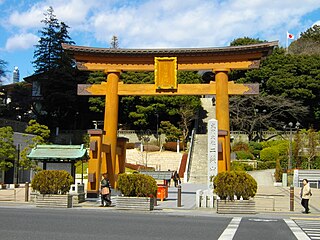
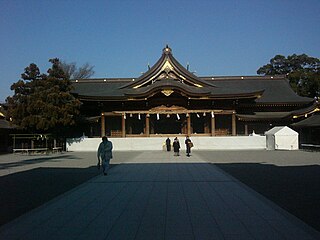
Mishima Taisha.
In Izu, where the mountains crash steeply down into the Pacific Ocean, this shrine has stood at the meeting point of land and sea for nearly two thousand years.
Its most extraordinary resident is a tree.
In the middle of the grounds grows a fragrant olive — kinmokusei — believed to be over twelve hundred years old. It is one of the largest of its kind in Japan, designated a national natural monument. For most of the year it is simply an ancient, gnarled tree, watched but not noticed.
Then, in late September, it blooms.
The flowers themselves are tiny — pale yellow, smaller than a grain of rice. Easy to miss with your eyes. Impossible to miss with your nose.
The scent reaches across the entire shrine grounds. On certain calm days, it has been said to travel two kilometers, drifting into the streets of the small town. Anyone walking nearby looks up. Some stop. Some begin walking toward the source without realizing they have changed direction.
This is what the tree has been doing, every September, for twelve hundred years.
The shrine was where Minamoto no Yoritomo prayed daily during his years of exile, before he founded the samurai government in nearby Kamakura. His prayers, we are told, were patient. The tree, watching, was older than him by four hundred years already.
Some places carry their meaning in scent rather than words.
If you visit in autumn, breathe in deeply.
| Hatsuhoryo (fee) | ¥ 500 |
|---|---|
| Hours | 9:00 – 16:30 |
| Style | Hand-written (jikagaki) |
| Limited Editions | Summer Festival + Sakura Festival editions |
| Notes | Original Mishima-taisha goshuin-cho |
Plan the visit end-to-end — hotels, transport, tours, and a goshuin book.
Some links are affiliate (commission-based). Helps fund the site.