| Founded | 836 CE (3rd yr of Showa) |
|---|---|
| Main Deities | 仁徳天皇 / 応神天皇 / 神功皇后 |
| Rank | Ichinomiya of Bungo Province |
| Annual Festival | Mar 15 (Reitaisai · Beach Market) |
| Goshuin Fee | ¥ 500 |
Yusuhara Hachimangu.
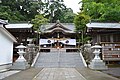
In the city of Oita, hidden inside dense cedar forest just minutes from the urban center, sits a shrine that demonstrates how completely a city can grow up around an ancient grove without ever penetrating it.
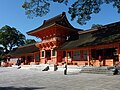
The shrine itself dates to the year 827. Its current main hall, gate, and worship halls were built in the late Edo period, in deep vermillion lacquer with intricate carvings, designated National Important Cultural Properties.
But what makes Yusuhara extraordinary is the tree.
Inside the grounds grows a Holt tree — Elaeocarpus zollingeri — a species native to the warm regions of Asia, rarely growing this far north in Japan. The trunk is gnarled, ancient, easily three centuries old. It has been declared a national natural monument.
Most cities in Japan grew first, then squeezed any remaining nature into small parks and pocket forests. The trees that survive in urban Japan are usually new — planted within the last century, replacing whatever was lost.
Yusuhara is different. The forest here is older than the city. The trees were standing when Oita was just a few villages. The shrine was already old when the modern city's first roads were drawn.
Walking through the cedars, you understand: the city grew up around this grove the way water flows around a stone. The grove never moved. The city had to accommodate.
Stand under the Holt tree. Look up at its branches.
Some places remind us that humans are guests in landscapes that are older than us.
| Hatsuhoryo (fee) | ¥ 500 |
|---|---|
| Hours | 9:00 – 16:30 |
| Style | Hand-written (jikagaki) |
| Limited Editions | Hama-no-Ichi edition (Mar 15) |
| Notes | Marked Ichinomiya of Bungo Province |
Plan the visit end-to-end — hotels, transport, tours, and a goshuin book.
Some links are affiliate (commission-based). Helps fund the site.